RESPONSIBILITIES, TEST, AND CHALLENGES OF PROPHETS IN HANDLING MISTAKES AND WRONG PROPHECIES
I. Responsibilities of Prophets When They Err
- Acknowledge Mistakes Before God and Man
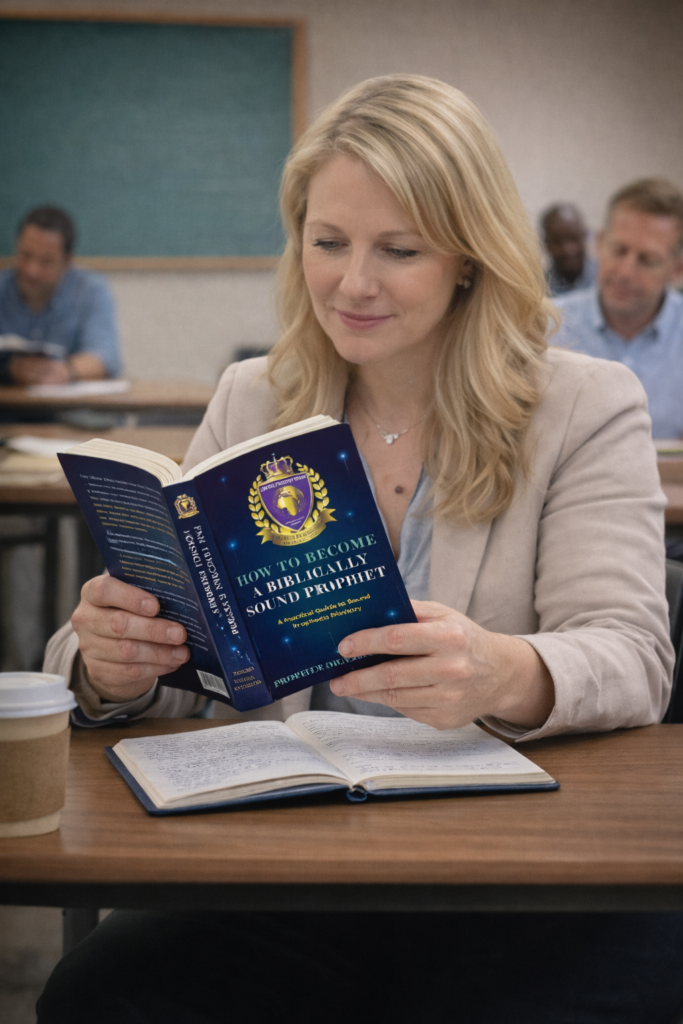
Prophets must take responsibility when a word they gave proves inaccurate. Concealing or defending error hardens the heart and damages God’s reputation among His people. Proverbs 28:13 “He that covereth his sins shall not prosper: but whoso confesseth and forsaketh them shall have mercy.”
2. Return to the Place of Intimacy with God
When mistakes occur, the prophet’s first response must be to return to fellowship with the Lord, seeking understanding, cleansing, and renewed discernment. P s a l m 5 1 : 1 0 – 1 2
“Create in me a clean heart, O God; and renew a right spirit within me… restore unto me the joy of thy salvation.”
3. Publicly Correct Misleading Words
If a wrong word was spoken publicly, the correction should also be public. This upholds integrity and helps protect God’s people from confusion.
James 5:16 “Confess your faults one to another, and pray one for another, that ye may be healed.”
1. Model Repentance and Humility
A true prophet’s strength lies not in perfection, but in humility before God. Admitting error demonstrates maturity, not weakness.
Micah 6:8 “He hath shewed thee, O man, what is good… to do justly, and to love mercy, and to walk humbly with thy God.”
5. Guard the Purity of God’s Name
When prophets humble themselves after failure, they protect the holiness of God’s name and restore trust in His Word.
Ezekiel 36:23
“And I will sanctify my great name… and the nations shall know that I am the Lord, saith the Lord God, when I shall be sanctified in you before their eyes.”
II. Tests of Prophets in Times of Error
- Test of Repentance and Correction
True prophets respond to error with repentance, not denial or deflection.
2 Samuel 12:13 “And David said unto Nathan, I have sinned against the Lord. And Nathan said… The Lord also hath put away thy sin.”
2. Test of Accountability
God tests whether the prophet remains teachable and accountable to other spiritual leaders and the church community
Proverbs 27:6 “Faithful are the wounds of a friend; but the kisses of an enemy are deceitful.”
3. Test of Heart Motives
Prophets must discern if their prophetic error stemmed from pride, haste, emotion, or presumption, and allow God to purify their motives.
Jeremiah 23:21 “I have not sent these prophets, yet they ran: I have not spoken to them, yet they prophesied.”
4. Test of Public Reaction
When correction brings criticism or rejection, the prophet must remain humble and trust God for vindication.
1 Peter 5:6 “Humble yourselves therefore under the mighty hand of God, that he may exalt you in due time.”
5. Test of Continued Faithfulness
Failure must not cause the prophet to withdraw permanently or stop obeying God’s true call. Restoration f o l l o w s r e p e n t a n c e a n d r e n e we d o b e d i e n c e . John 21:17 “Jesus saith unto him… Feed my sheep.”
III. Challenges Faced by Prophets After Giving Wrong Words:
- Restoring Trust Among God’s People
Prophets must rebuild credibility through consistent humility, accuracy, and love for truth.
Proverbs 22:1 “A good name is rather to be chosen than great riches.”
2. Overcoming Shame and Condemnation
Satan seeks to use failure to silence the prophet; God uses it to deepen dependence on His grace.
Romans 8:1 “There is therefore now no condemnation to them which are in Christ Jesus.”
3. Avoiding Defensive Pride
Some may attempt to justify their words rather than repent. True restoration begins with surrender, not self- protection.
Psalm 139:23–24 “Search me, O God, and know my heart… and lead me in the way everlasting.”
4. Discerning Between Human Error and False Prophecy
Prophets must discern whether their mistake came from human limitation or a deeper issue of disobedience. Each requires repentance, but also wisdom for correction. 1 John 4:1 “Beloved, believe not every spirit, but try the spirits whether they are of God.”
5. Restoring Fellowship and Unity in the Body
Prophets must actively seek reconciliation with those affected by their words, demonstrating love and humility. Matthew 5:23–24 “First be reconciled to thy brother, and then come and offer thy gift.”
IV. Practical Guidelines for Prophets After Mistakes
- Seek God’s face in repentance and renewal — Psalm 51:10–12; Hosea 6:1–2
- Be transparent and accountable — James 5:16; Proverbs 11:14
- Apologize and clarify publicly when necessary — Matthew 5:23–24
- Recommit to accuracy and careful discernment — 1 Thessalonians 5:21; Isaiah 8:20
- Maintain humility and teachability — 1 Peter 5:5–6
- Let restoration come through service and love — Galatians 6:1–2
Conclusion:
When prophets make mistakes or give wrong words, the response must reflect the heart of Christ—humble, repentant, and accountable. True prophetic integrity is not proven by being
always right, but by being
always real before God.
True restoration involves:
- Honest repentance before God
- Transparency and correction before people
- Renewed intimacy with the Holy Spirit
- Continued faithfulness to God’s call
- Growth in discernment and character Key Verse:
Psalm 34:18 “The Lord is nigh unto them that are of a broken heart; and saveth such as be of a contrite spirit.”
Jeremiah 23:28–29 “He that hath my word, let him speak my word faithfully. What is the chaff to the wheat? saith the Lord. Is not my word like as a fire? saith the Lord.”
Every true prophet of God must remember:
- Admit and correct mistakes
- Guard God’s name above personal
- Stay humble, teachable, and dependent on the
- Let repentance be the doorway to deeper
- Let love, truth, and humility define every prophetic act